
 Subscribe to
 Subscribe to our
 There was a lot of talk during the 2011 Christmas season about the growth of mobile commerce. But how much mobile shopping actually took place, what were consumers using their phones for, and how did they feel about it?
To investigate these and similar questions, dotJWT (the digital arm of the JWT) conducted an in-depth survey of several hundred mobile shoppers .
The results show that mobile is rapidly becoming a very significant commerce channel, but the actual mobile shopping behavior of today’s consumers may not be what you think.
The full study report covers a wide variety of mobile shopping and behavioral topics. A few that we found most interesting are discussed here, and the download information for the full study is given below.
Mobile shopping is more than mobile purchasing
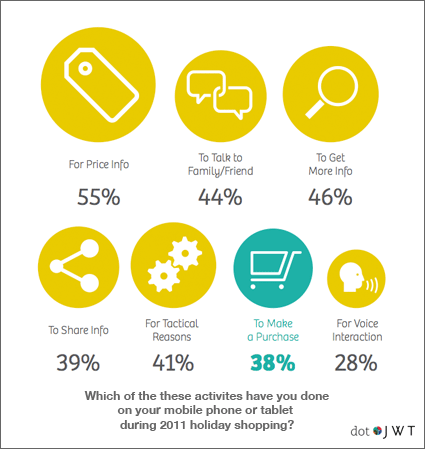
The use of mobile for actually purchasing products is rising rapidly, with over 1/3 of consumers saying they had made a mobile purchase. However, the phone is used for many other shopping related activities, and in fact the most popular use of mobile is for comparing price information (55% of consumers).
Mobile shopping is not only for when you are mobile
Surprisingly, most of the purchases made over mobile were made when the shopper was either at home, at work, or at a friend’s house. All of these locations are likely to have had access to the internet via PC, which means the mobile channel is actually being used instead of PC channel, not only when PC’s are not available.
This is consistent with other studies that show, for example, that most mobile content is consumed at home, rather then while in a remote location.

Consumers like Mobile Shopping!
Perhaps the most encouraging conclusion from this study is that consumers are in general quite satisfied with mobile shopping.
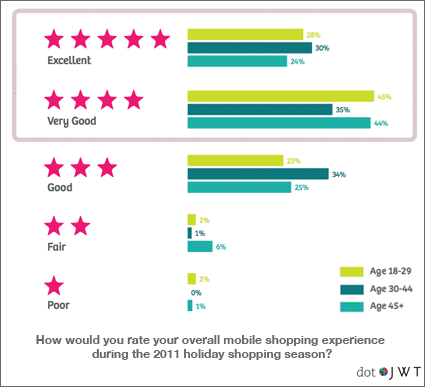
69% rated the overall mobile shopping experience as either “Excellent” or “Very good”. Some of the reasons given were the convenience of not waiting in lines, and the ability to make a purchase while it was still top of mind.
Not surprisingly, the youngest age group – 18 to 29 year olds – had the highest satisfaction, though all age groups were quite high.

| Tweet |
 del.icio.us
|

Subscribe to MobiAD | |

|

|
|
|
|
|
